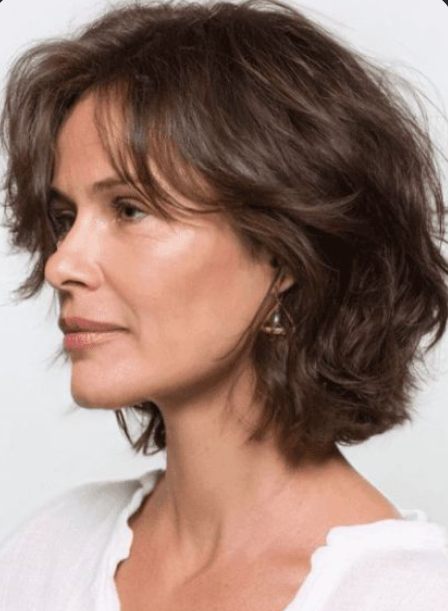
I still remember the morning my aunt stood in front of the mirror, fluffing her hair and sighing, “Why does it feel like it’s getting thinner every year?” If you’ve had that same moment—tilting your head, trying to coax volume out of fine strands—you’re not alone. Hair changes a lot after 60, and when it’s thin, it can feel extra frustrating. Some styles just fall flat, others feel like they belong to a much younger version of you. So what actually works now?
That’s where short hairstyles for thin hair over 60 can be a total game-changer. The right cut can add movement, make your hair look fuller, and honestly, make mornings way easier. No endless styling. No fighting with limp strands. In this article, I’ll walk you through smart, flattering options that celebrate where you are now—because thin hair doesn’t mean boring hair. It just means you need the right approach (and a little insider know-how).
Short Hairstyles for Thin Hair Over 60
Short hairstyles for thin hair over 60 are easy to manage and help hair look fuller and healthier. The right short haircut can add volume, highlight facial features, and give a fresh, youthful look.
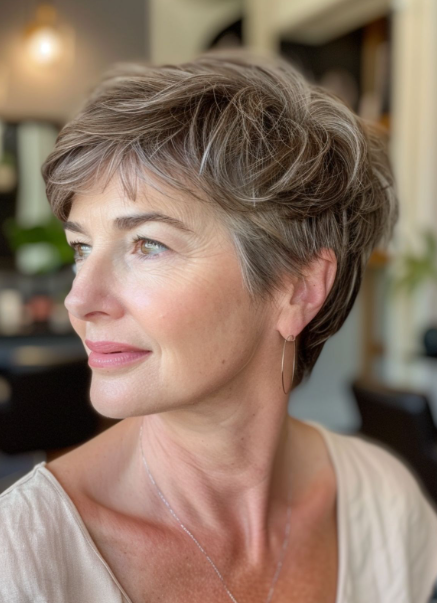
I’ll be honest, the pixie cut is one of those styles I resisted for years. I thought it would make my thin hair look even flatter, but in my experience, it does the opposite when done right. Keeping the sides neat and the top slightly longer gives the illusion of density, especially around the crown where thinning usually shows first. I’ve found that a soft, choppy finish works far better than anything too sharp or stiff. What I tell women over 60 is this: don’t overstyle it. A pixie needs movement, not perfection. I usually use a tiny bit of lightweight styling cream, rub it between my fingers, and just mess it up a little. Honestly, the less you try, the better it looks. This cut also makes mornings easier, which, in my opinion, is a big win at this stage of life.
Layered Pixie with Side Bangs
A layered pixie with side bangs has saved many of my clients—and me—from bad hair days. The side bangs are the real hero here. They soften the face, hide sparse areas near the temples, and add a gentle frame that feels youthful without trying too hard. I’ve found that layers placed strategically on top give thin hair a lift that blow-drying alone never could. To be fair, this cut needs a stylist who understands thin hair. I always recommend asking for soft, feathered layers instead of heavy chopping. Styling-wise, I keep it simple: a round brush for the bangs and a quick blast of air at the roots. It feels polished but still relaxed, like you didn’t spend ages in front of the mirror.
Short Feathered Cut
The short feathered cut reminds me of the hairstyles many of us grew up seeing, but with a modern twist. When done well, it’s light, airy, and flattering for thin hair over 60. I’ve noticed that feathering helps hair fall naturally, which is crucial when volume is limited. It doesn’t cling to the scalp the way blunt cuts sometimes do. In my opinion, this style works best when you embrace softness. I avoid heavy gels and stick to a volumizing mousse used sparingly. I usually blow-dry with my fingers instead of a brush, lifting at the roots as I go. The result feels natural and lived-in, not stiff or dated, which honestly makes all the difference.
Chin-Length Bob
I’ve always had a soft spot for the chin-length bob, especially for women dealing with thinning hair. It sits right at the jawline, which gives structure to the face and makes hair look fuller by default. I’ve found that keeping the ends slightly textured prevents that flat, limp look that thin hair can fall into so easily. What I love most is its versatility. You can wear it straight, tucked behind the ears, or with a slight bend using a flat iron. I usually tell readers to avoid too much length below the chin because that’s when thin hair starts to drag down the look. Keep it light, keep it clean, and let the shape do the work.
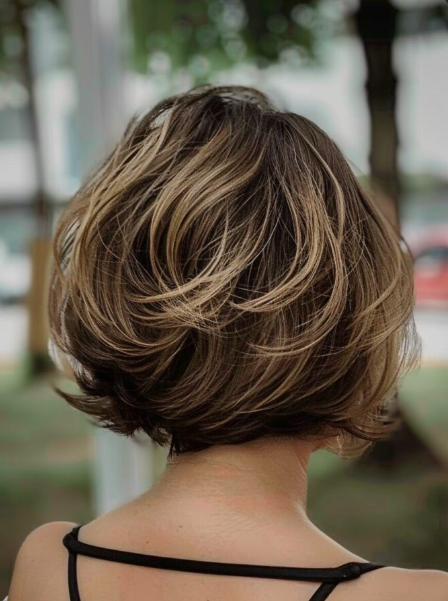
The layered bob is one of those cuts I recommend again and again, and for good reason. Layers give thin hair movement, and movement equals volume—at least visually. I’ve found that even subtle layering can change how hair behaves, making it feel less flat and more responsive when styling. Personally, I prefer layers that start around the cheekbones rather than too high up. It keeps the shape balanced and avoids that wispy, over-thinned look. A quick blow-dry with a paddle brush and a touch of root spray is usually enough. Honestly, it’s one of the easiest styles to maintain while still looking intentional.
Textured Crop
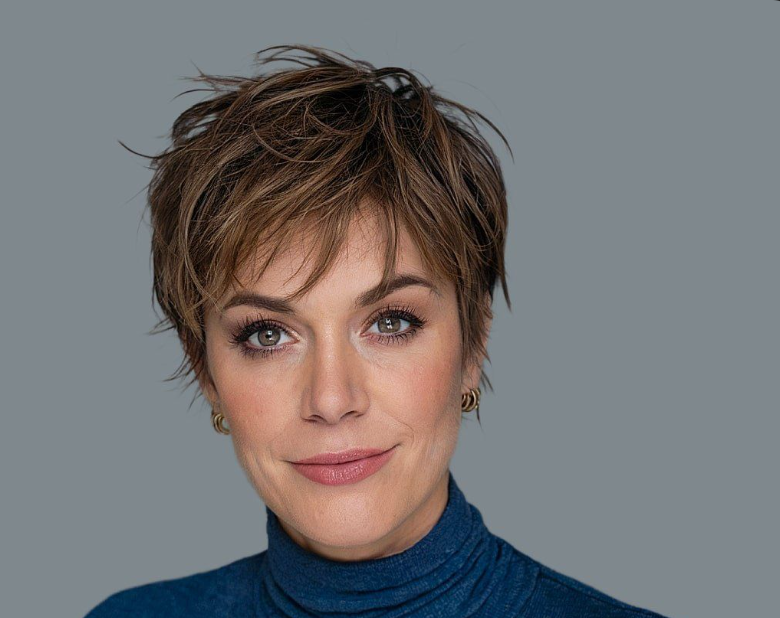
A textured crop is for women who are ready to stop fighting their hair and start working with it. I’ve seen this cut completely transform thin hair by adding uneven lengths that trick the eye into seeing fullness. In my experience, texture is far more forgiving than precision. I always say this cut looks best when it’s a little imperfect. Skip the smoothing tools and use a light wax or paste to define pieces. I just pinch and twist small sections with my fingers. It feels modern, confident, and low-effort, which, to be fair, is exactly what many women over 60 are looking for.
Tapered Short Cut
The tapered short cut is understated but incredibly flattering for thin hair. The gradual shortening at the back and sides keeps everything neat, while the slightly longer top adds shape. I’ve found this style especially helpful for women whose hair thins more around the nape and sides. Styling is straightforward, and honestly, that’s part of its charm. I usually recommend a volumizing spray at the crown and nothing else. Let the cut speak for itself. It’s clean, elegant, and practical without feeling boring, which is harder to achieve than it sounds.
Classic Boy Cut
I know the classic boy cut can sound intimidating, but hear me out. I’ve worn variations of it myself, and it can be incredibly freeing. For thin hair, it removes the pressure of trying to create volume where there isn’t much. Instead, it leans into simplicity and confidence. In my opinion, the key is softness. Ask for rounded edges and a slightly longer top so it doesn’t look too severe. I usually just smooth it with a light cream and go. There’s something refreshing about a style that doesn’t pretend to be anything else—it just works.
The short shag is one of my favorite recommendations for thin hair over 60, mainly because it brings life back into hair that feels tired. The layers are uneven, the shape is relaxed, and it gives movement without demanding perfection. I’ve found it especially flattering for women who want a casual, youthful vibe. I tell readers not to overthink this one. A bit of mousse, a quick scrunch, and you’re done. Let the layers fall where they may. Honestly, the messier it looks, the better it feels, and that carefree attitude shows.
A soft curly short cut is beautiful when handled gently. I’ve seen many women fight their natural curl as hair thins, but in my experience, curls can actually hide thinning better than straight styles. The trick is keeping them soft and hydrated, not stiff or crunchy. I usually recommend a curl cream instead of gel and air-drying whenever possible. Scrunch lightly and stop touching it. In my opinion, embracing natural texture at this age feels empowering. It’s less about control and more about letting your hair be what it wants to be—and honestly, that’s often when it looks best.
Hair Care Tips for Thin Hair Over 60
As hair becomes thinner with age, the right hair care routine is important to keep it healthy and full. Simple habits and gentle products can help improve hair strength, volume, and overall appearance.
Recommended shampoo and conditioner types: Use lightweight, volumizing shampoos and conditioners made for thin or fine hair. Avoid heavy, creamy products as they can make hair look flat.
How often to wash thin hair: Washing 2–3 times a week is usually enough. Too much washing can dry the hair, while washing too little can make it look oily and limp.
Importance of scalp care: A clean and healthy scalp helps hair grow better. Massage the scalp gently while washing to improve blood circulation and remove buildup.
Gentle brushing and handling: Use a wide-tooth comb or soft brush to avoid breakage. Always be gentle, especially when hair is wet, as thin hair breaks easily.
Hi, I’m Anna Spencer, A professional hairstylist based in North Carolina and the creator of Hairstyles for Life. With over a decade of hands-on salon experience, I’ve styled everything from everyday looks to runway-ready transformations. I started this website to share my passion for hair, offer expert tips, and help you feel confident in your personal style no matter your hair type or length. Whether you’re looking for quick tutorials, timeless trends, or honest product advice, you’ll find it all here.