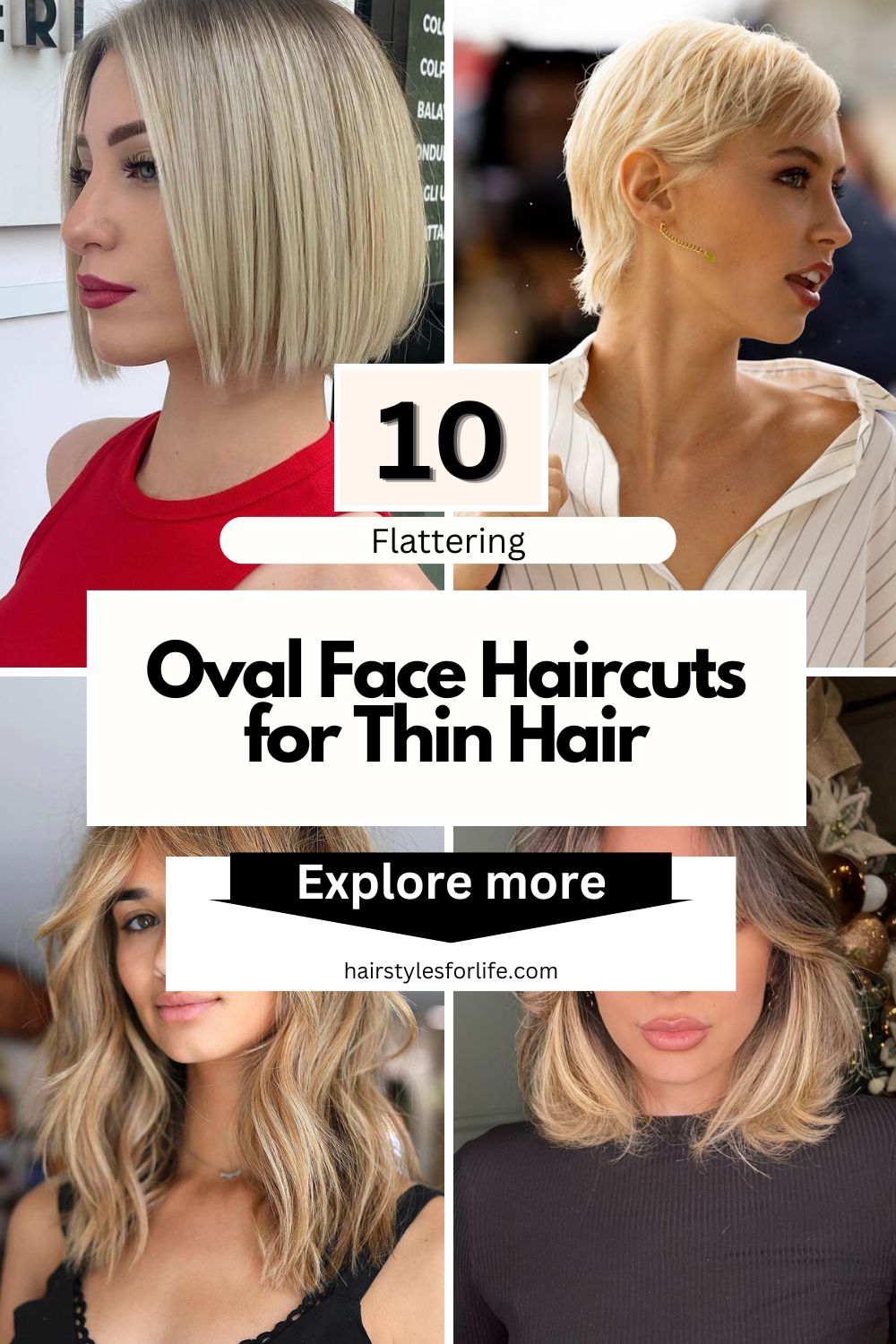
I remember standing in front of the mirror one morning, tugging at my hair and thinking, Why does it look so flat no matter what I do? I’ve got an oval face, which everyone says is “lucky,” but when your hair is thin, that advice doesn’t always feel helpful, does it? Some days it feels like every haircut looks great on other people… just not on you. If you’ve ever left a salon wishing for a little more volume, a little more life in your hair, trust me—you’re not alone.
The good news? Oval face haircuts for thin hair can actually work in your favor when you know what to look for. It’s not about chasing trends or copying someone else’s style. It’s about finding shapes, layers, and lengths that make your hair feel fuller and easier to manage. In this guide, I’ll walk you through what truly works, what to avoid, and how to choose a haircut that finally feels right for you.
Oval Face Haircuts for Thin Hair
Oval face haircuts for thin hair are all about smart shapes that add volume without weighing your hair down. The right cut can make thin hair look fuller while perfectly highlighting the natural balance of an oval face.
Honestly, the blunt bob is one of those cuts I keep coming back to for thin hair on an oval face. I’ve seen it work so many times because it doesn’t try too hard. The clean, straight ends instantly make the hair look thicker, and on an oval face, the shape just sits right without needing too much adjustment. I remember one client who was scared it would look “too flat,” and after the cut, she kept touching the ends because they finally felt full. That’s the magic of blunt lines—they give structure where thin hair usually falls short.
In my opinion, this cut works best when it’s kept simple and slightly above or below the chin. I usually tell people not to over-style it. A light blow-dry with a round brush or even air-drying with a smoothing cream is enough. Too many layers ruin the whole point. If you want volume, focus on the roots, not the ends. That’s where thin hair really needs the lift.
Layered Lob
I’ve found the layered lob to be a safe but stylish choice when someone wants movement without losing length. For oval faces, this cut balances everything so naturally that you don’t have to fight your features. The layers are what save thin hair here—they keep it from looking limp while still holding onto that flattering, shoulder-grazing length. I’ve worn this style myself during phases when I wasn’t ready to go short, and it always felt easy and put-together.
To be fair, the trick is keeping the layers light and intentional. Over-layering kills the volume fast. I usually suggest soft layers around the face and just enough at the ends to prevent that flat, stringy look. Styling-wise, a loose wave does wonders. Even a quick pass with a curling wand gives the illusion of thicker hair without much effort. It’s one of those cuts that grows out nicely too, which is a big win.
Textured Pixie Cut
The textured pixie is for those moments when you’re just done with fussing over thin hair. I love this cut because it flips the problem on its head—less hair, more impact. On an oval face, the proportions are already working in your favor, so a pixie doesn’t feel risky. I’ve seen people walk in nervous and walk out feeling oddly powerful, which is always fun to watch. Texture is everything here; without it, the cut falls flat fast.
I always say this isn’t a “wash and forget” cut, but it’s close. A tiny bit of texturizing paste or wax is enough to create lift and shape. I personally prefer keeping the top slightly longer so you can play with volume. The sides stay neat, the top stays airy, and thin hair suddenly looks intentional instead of fragile.
Shoulder-Length Soft Layers
This is one of my go-to recommendations when someone wants a change but not a shock. Shoulder-length soft layers are gentle, flattering, and very forgiving. For oval faces, this length frames the face without dragging it down, and the soft layers stop thin hair from clinging to the scalp. I’ve noticed this cut especially suits people who like low-maintenance styles but still want movement. It feels familiar, but better.
What I usually stress is keeping the layers blended, not choppy. Thin hair needs softness, not harsh cuts. A simple blow-dry with a bit of volumizing mousse makes a huge difference here. If you part it slightly off-center, it instantly adds life. It’s an easy, wearable haircut that doesn’t scream for attention—but quietly does its job.
Long layers with curtain bangs are honestly a favorite of mine for thin hair, when done right. The oval face shape handles curtain bangs beautifully, and they create the illusion of fullness around the face. I’ve found that even people who swear they “can’t do bangs” end up loving this look. The layers keep the length light, while the bangs add softness and shape without feeling heavy.
The key is keeping the bangs wispy and well-blended. Thick bangs on thin hair are a mistake—I’ve seen that regret too many times. I usually recommend styling them with a round brush or roller for that effortless swoop. It frames the face, adds body at the front, and somehow makes the rest of the hair look fuller too.
Side-Swept Bangs Haircut
Side-swept bangs are one of those quiet heroes for thin hair. I’ve suggested this cut more times than I can count because it works without demanding much. On an oval face, side-swept bangs create a nice diagonal line that adds interest and volume at the front. I remember a client telling me she finally stopped pinning her bangs back after getting this cut—that’s always a good sign.
I usually pair these bangs with light layers through the rest of the hair. Nothing dramatic. The goal is movement, not bulk. Styling is simple: a quick blow-dry to one side and you’re done. In my opinion, this is one of the easiest ways to refresh thin hair without committing to a big chop or high-maintenance routine.
Wispy Bob Cut
The wispy bob is perfect when you want something soft and airy instead of sharp and structured. I like this cut for thin hair because it doesn’t fight its natural texture. On an oval face, the wispy ends add balance and keep the look relaxed. I’ve found it especially suits people who don’t love overly polished styles and prefer something a bit undone.
That said, the wisps need control. Too thin, and it looks messy. I usually recommend a lightweight styling cream to keep the ends defined. A slight wave helps too—it gives the hair some body without weighing it down. This cut feels effortless, but there’s a thoughtful balance behind it.
Shaggy Bob with Light Layers
I’ll admit, the shaggy bob surprised me when I first started recommending it for thin hair. But once I saw how well it worked on oval faces, I was sold. The light layers add texture and movement, making thin hair look fuller without trying too hard. It has that casual, “I didn’t overthink this” vibe that people love.
The key is keeping the layers light and well-spaced. Too much shag, and thin hair collapses. I usually suggest styling with a bit of mousse or sea salt spray for that lived-in feel. It’s playful, modern, and a great option if you’re bored of clean, classic cuts.
This cut is a classic for a reason. A chin-length bob with volume sits perfectly on an oval face and gives thin hair a much-needed boost. I’ve seen this haircut completely change how thick someone’s hair looks, just by lifting it at the roots and keeping the length precise. It’s short, but not intimidating.
I usually recommend a slight undercut at the back or subtle layering to build volume. Blow-drying with a round brush makes a big difference here. In my experience, this cut works best when it’s styled intentionally—but not stiff. You want bounce, not helmet hair.
Feathered Medium Cut
The feathered medium cut feels a bit nostalgic, but honestly, it still works. For thin hair and oval faces, the feathered layers add softness and flow without sacrificing shape. I’ve found it especially flattering for people who want movement but don’t love heavily layered or edgy styles. It feels gentle and wearable.
The layers should be light and airy, never chunky. I usually suggest styling with a soft blow-dry or light curling at the ends. This cut moves beautifully and gives thin hair a fuller appearance without screaming for attention. Sometimes, the quiet styles are the most reliable ones.
Hair Color Ideas That Add Dimension
The right hair color can make thin hair look fuller and more alive, especially on an oval face. Adding soft contrast and depth helps create the illusion of volume without changing your haircut.
Highlights and lowlights for depth Mixing lighter and darker shades adds dimension and makes thin hair look thicker. Soft, blended highlights work best instead of harsh stripes.
Balayage for movement Balayage gives a natural, sun-kissed effect that adds flow and texture to thin hair. It keeps the roots soft while making the lengths look fuller.
Colors to avoid that emphasize thinness Flat, single-tone colors—especially very dark shades—can make thin hair look limp. Super light platinum shades can also show scalp more easily, so it’s better to choose balanced, multi-tonal colors.
Hi, I’m Anna Spencer, A professional hairstylist based in North Carolina and the creator of Hairstyles for Life. With over a decade of hands-on salon experience, I’ve styled everything from everyday looks to runway-ready transformations. I started this website to share my passion for hair, offer expert tips, and help you feel confident in your personal style no matter your hair type or length. Whether you’re looking for quick tutorials, timeless trends, or honest product advice, you’ll find it all here.