
I still remember standing in front of the mirror one morning, hairbrush in hand, thinking, Why does my hair feel heavier every year, yet harder to style? If you’ve got thick hair and you’re over 50, you probably know that feeling all too well. One day it looks full and fabulous, the next it’s puffed up in all the wrong places. And let’s be honest—most haircut advice out there doesn’t really get us, does it?
That’s why this guide on Hairstyles for Women Over 50 With Thick Hair exists. Thick hair can be a blessing, sure, but it also needs the right shape, length, and layers to truly work for you. Ever walked out of a salon thinking, This isn’t what I imagined? Yeah, same.
Here, I’ll share styles that actually make thick hair easier to manage, lighter, and more flattering—without trying to make you look 30 again. Just confident, comfortable, and very much you.
Hairstyles for Women Over 50 With Thick Hair
Hairstyles for women over 50 with thick hair focus on enhancing natural volume while keeping the look soft, stylish, and easy to manage. The right cut can reduce heaviness, add shape, and highlight your features beautifully at any age.
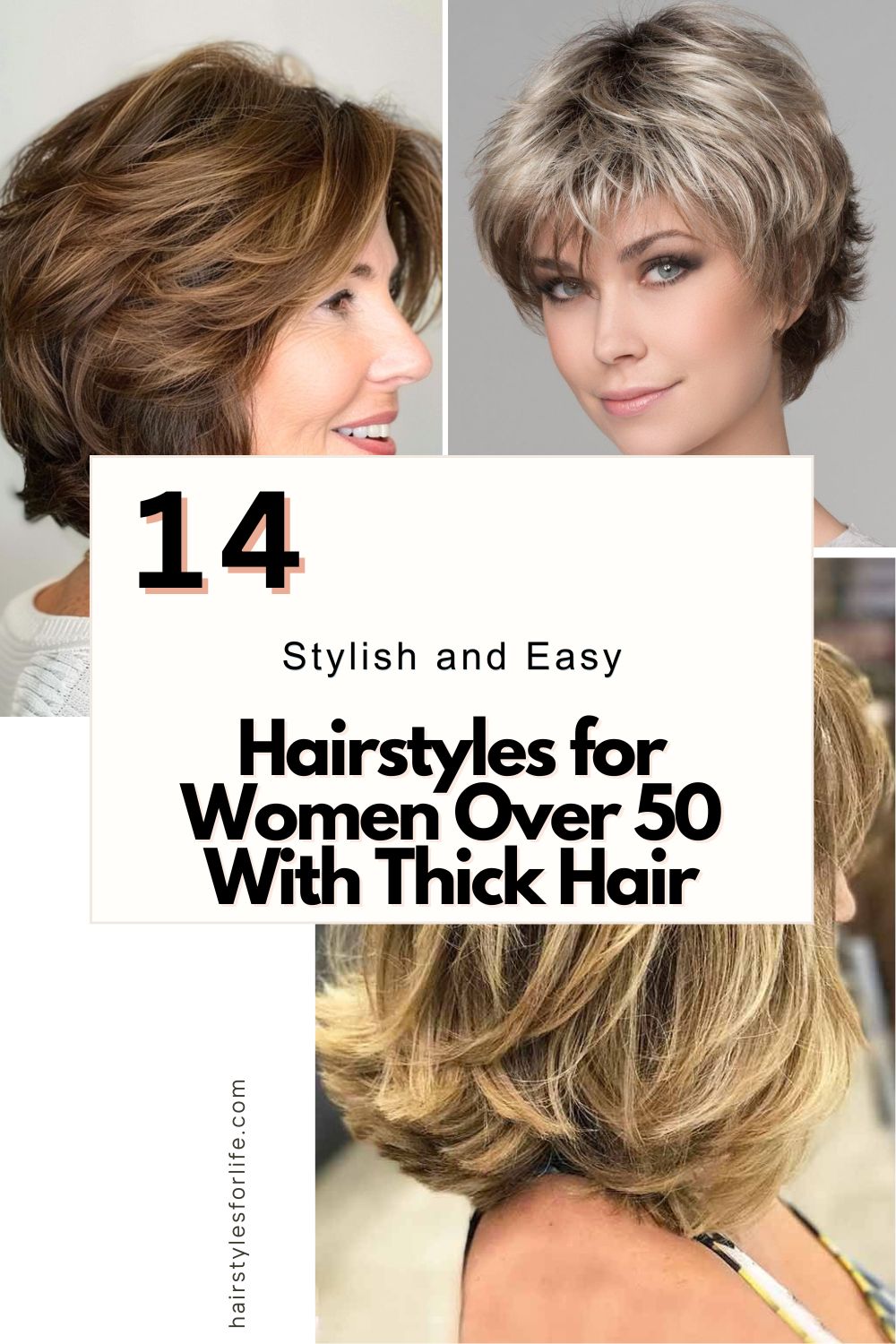
Layered Bob

Honestly, the layered bob is one of those hairstyles I keep coming back to, especially for thick hair after 50. I’ve seen so many women hesitate, thinking a bob will feel too “done” or too short, but in my experience, layers completely change the game. They remove that heavy, boxy feeling thick hair can get and replace it with movement. I remember getting my first layered bob after years of longer hair and being shocked at how light my head felt. It still looked full, just not overwhelming.
To be fair, the key is asking for soft, blended layers—not choppy ones. I always tell my stylist I want the weight taken out, not the length. Styling-wise, I usually just rough blow-dry and add a little round brush at the ends. Thick hair already has body, so you don’t need to fight it. Let it work for you, not against you.
Textured Pixie Cut
I’ll admit, I was nervous the first time I recommended a textured pixie to a woman over 50 with thick hair. But honestly, once I saw the confidence boost, I was sold. Thick hair is actually perfect for a pixie because it gives structure and fullness without looking flat. Texture keeps it modern and avoids that stiff, helmet-like look we all want to avoid.
In my opinion, the magic is in leaving the top a bit longer and messy. I’ve found that women who embrace a slightly undone finish feel younger and more relaxed about their hair. A pea-sized amount of styling cream, scrunched in with fingers, is usually enough. No fancy routine. You wake up, shake it out, and go—and that freedom is priceless at this stage of life.
Shoulder-Length Layered Cut

This is the cut I often call the “safe but smart” option. Shoulder-length layers work beautifully for thick hair over 50 because they give shape without committing to short hair. I’ve worn this style during busy phases of my life, and honestly, it never let me down. It pulls back easily, styles quickly, and still looks polished when left natural.
What I’ve learned is that long layers are non-negotiable here. Without them, thick hair can sit like a triangle around the shoulders. I usually suggest subtle face layers to soften the look. A simple blow-dry or loose waves instantly make it look intentional. It’s the kind of haircut that quietly works hard for you, even on days you don’t want to.
Long Bob with Soft Layers
The long bob, or lob, has a special place in my heart. It feels grown-up but not old, stylish but not trendy in an exhausting way. For thick hair, soft layers are what keep it flattering. I’ve seen blunt lobs look too heavy, especially around the jaw, and that’s when people feel frustrated.
Personally, I love this cut slightly below the collarbone. It balances fullness while still giving movement. I usually style it with a blow-dryer and a big round brush, nothing complicated. On lazy days, I just add a few bends with a curling iron. It’s one of those cuts that adapts to your mood, and that flexibility really matters as we get older.
Feathered Medium Cut
Feathered cuts might sound old-school, but honestly, when done right, they’re incredibly flattering for thick hair over 50. I remember watching my stylist feather my ends years ago and thinking, “Oh, this actually looks light.” The hair moved again, instead of sitting heavy and still.
In my experience, feathering works best at medium length, especially around the face and crown. It gives lift without teasing or over-styling. I usually recommend blow-drying away from the face with a round brush. Thick hair holds shape well, so the style lasts. It’s soft, feminine, and forgiving—perfect if you want something polished without trying too hard.
Short Tapered Cut

Short tapered cuts are underrated, in my opinion. They’re practical, yes, but also surprisingly elegant. Thick hair benefits from tapering because it removes bulk at the nape and sides while keeping fullness where you want it. I’ve had clients tell me they finally felt “put together” again after switching to this style.
The trick is balance. I always suggest keeping the crown slightly longer to avoid a flat look. Styling is simple—just a touch of mousse or cream and finger styling. Honestly, it’s one of the easiest cuts to maintain, and when life gets busy, that simplicity can feel like a gift.
Wavy Lob for Thick Hair
If your thick hair has even a hint of wave, this cut is gold. I’ve found that a wavy lob embraces natural texture instead of fighting it. When I stopped straightening my thick, wavy hair daily, this cut made the transition feel effortless and stylish.
Layers are essential here, but not too many. I usually suggest long layers that enhance the wave pattern. A bit of sea salt spray and air-drying can do wonders. To be fair, it won’t look “perfect,” but that’s the point. It looks lived-in, relaxed, and confident—qualities that matter far more than perfection.
Face-Framing Layered Hairstyle

Face-framing layers are my go-to recommendation for women who want a change without losing length. Thick hair can feel heavy around the face, and these layers instantly soften everything. I’ve seen women look in the mirror and smile because their features suddenly stand out again.
I’ve found that subtle, well-placed layers work better than dramatic ones. They blend naturally and grow out gracefully. Styling can be as simple as blow-drying the front sections with a round brush. It’s a small change, but honestly, it can make a big emotional difference.
Chin-Length Bob with Layers
This one is bold, and I love that about it. A chin-length layered bob can look incredibly fresh on women over 50 with thick hair. I remember being surprised at how slimming it looked when done properly. Layers prevent that heavy shelf effect around the jaw.
In my opinion, precision matters here. The cut needs movement, not bluntness. I usually recommend light styling—nothing stiff. A bit of smoothing cream and a quick blow-dry is enough. It’s confident, stylish, and says you know exactly who you are.
Long Layers with Side Part

Long layers with a side part are perfect if you love length but want control. Thick hair behaves better when it’s guided, and a side part does exactly that. I’ve worn this style during times I wanted versatility without drama.
The side part adds lift at the roots and softens facial lines, which I really appreciate. I’ve found that long layers prevent the hair from dragging the face down. Whether worn straight or wavy, it feels timeless. Sometimes, the simplest adjustments—like changing your part—make the biggest difference.
Styling Tips for Thick Hair After 50

Hi, I’m Anna Spencer, A professional hairstylist based in North Carolina and the creator of Hairstyles for Life. With over a decade of hands-on salon experience, I’ve styled everything from everyday looks to runway-ready transformations. I started this website to share my passion for hair, offer expert tips, and help you feel confident in your personal style no matter your hair type or length. Whether you’re looking for quick tutorials, timeless trends, or honest product advice, you’ll find it all here.