
I still remember sitting in a salon chair years ago, staring at my reflection and thinking, Why does my hair always look flat no matter what I do? If you’ve got thin hair, you probably know that feeling way too well. You want volume, movement, something—but instead, your hair just kind of hangs there. Frustrating, right?
That’s exactly why Bob Haircuts For Thin Hair Ideas became such a personal obsession for me. A good bob can honestly change everything. The right length, the right layers, the right shape… it can make thin hair look fuller without spending hours styling it every morning (because who has time for that?).
In this guide, I’ll walk you through styles that actually work for fine, thin hair—not the ones that only look good in photos. We’ll talk about what adds volume, what to avoid, and how to make a bob feel you. Ready to finally love your haircut? Let’s get into it.
Bob Haircuts For Thin Hair Ideas
Bob haircuts for thin hair are a smart way to add shape, movement, and the look of extra volume without heavy styling. With the right length and cut, a bob can make fine hair feel fuller and more confident every day.
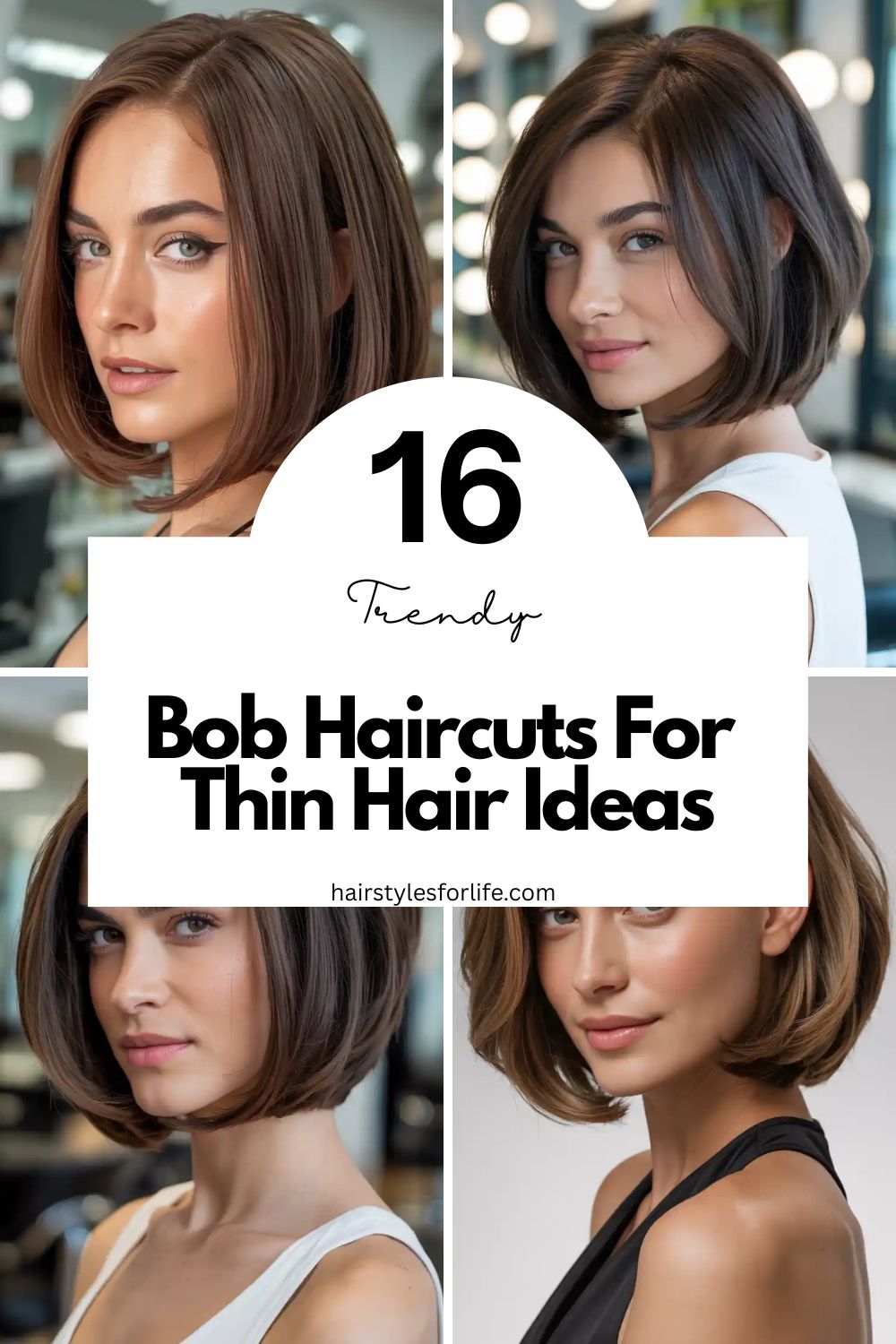
Classic Blunt Bob

Honestly, the classic blunt bob is where I still start with most of my thin-hair models. I’ve done this cut so many times that I can almost predict how someone will react when they see the mirror—there’s always that surprised pause. To be fair, blunt doesn’t mean flat if you cut it right. When I’m working on fine hair, I keep the ends super clean and strong, because thin hair needs that visual weight. I’ve found that once you remove too many wispy ends, the whole haircut suddenly looks fuller without any tricks.
What I usually tell clients (and what I’ve seen on my models) is that this bob works best when styled simply. No heavy curling, no over-layering. A smooth blow-dry with a slight bend at the ends is enough. In my opinion, this is one of those haircuts that does the work for you. You don’t need to fight it every morning, and that’s why I keep coming back to it.
Layered Bob for Thin Hair
Layered bobs get a bad reputation with thin hair, and honestly, I get why. I’ve seen too many over-layered disasters walk into my chair. But when I control the layers and keep them soft, it changes everything. On my models with fine hair, I add just enough layering to create movement without stealing density. It’s a balancing act, and yes, it took me years to feel confident doing it this way.
What I love about this bob is how alive it looks on camera and in real life. When the model turns her head, the hair moves instead of hanging there. I usually style it with my fingers rather than a brush because it keeps things relaxed. If you’re trying this look, don’t chase volume everywhere—focus it around the face and crown. That’s where thin hair really benefits from layers done thoughtfully.
Textured Bob with Soft Ends

This one is for people who hate sharp lines. I’ve had models literally tell me, “I don’t want my hair to look freshly cut.” That’s where textured bobs with soft ends come in. I use point cutting and subtle razor work, not to thin the hair, but to break that harsh edge. Honestly, the goal is movement, not mess.
On thin hair, soft ends stop the haircut from looking too severe. I’ve found this style photographs beautifully because it doesn’t scream “styled.” When I finish this bob, I usually scrunch in a light cream and let the hair air-dry a bit. To be fair, it won’t give you dramatic volume, but it gives you that effortless look people always ask about. In my opinion, it’s perfect if you want fullness without looking like you tried too hard.
Short Bob with Volume at Crown
Short bobs scare people with thin hair, but I actually love doing them. When I cut these on my models, I focus almost entirely on the crown area. That’s where thin hair needs help the most. I slightly over-direct sections there, which sounds technical, but the result is simple—it lifts the hair naturally.
What I’ve noticed is how confident models feel once they see that height at the back. Suddenly, thin hair doesn’t feel like a limitation anymore. Styling-wise, I keep it minimal. A quick round brush at the crown, hands through the rest, done. Honestly, this bob works best when you don’t flatten it with heavy products. Let the cut do its job. If you want something bold but still practical, this is one of my go-to choices.
Chin-Length Bob Cut
Chin-length bobs are tricky, and I won’t pretend they aren’t. I’ve messed this up early in my career, so now I’m very intentional with it. On thin hair, the exact length matters. Too short and it flips weird, too long and it drags the face down. When it hits just at the chin, though, it frames the face beautifully.
On my models, I keep the perimeter clean and the interior simple. I don’t overload it with layers. Honestly, this bob looks best when styled sleek or slightly tucked behind the ears. I’ve found it gives thin hair a polished, editorial feel without trying to fake thickness. If you’re considering this cut, commit to the length and don’t keep asking for “just one more trim.” Precision is what makes this bob work.
Inverted Bob for Fine Hair

The inverted bob is one of those styles people think is outdated, but I disagree. When done right on fine hair, it’s magic. I love how the stacked back creates instant volume without teasing. On my models, the transformation is always dramatic—flat hair suddenly has shape.
What I’ve learned is to keep the front lighter and not too long. Thin hair can’t carry heavy fronts without collapsing. I usually style it with a slight inward curve, nothing stiff. Honestly, this bob is great if you want volume but still want your hair off your neck. In my opinion, it’s one of the smartest cuts for thin hair because the structure does most of the work, even on lazy styling days.
Asymmetrical Bob Hairstyle
Asymmetrical bobs are my secret weapon when thin hair feels boring. I’ve noticed that uneven lengths distract the eye in the best way possible. Instead of noticing fine strands, people notice the shape. When I do this on models, I keep the difference subtle, not dramatic, especially for everyday wear.
What I love is how modern it feels without being loud. Styling is simple—straighten lightly or add soft bends. Honestly, the asymmetry itself creates interest, so you don’t need volume everywhere. I’ve found this works really well for clients who want something different but aren’t ready for edgy cuts. It’s quiet confidence in haircut form, and thin hair carries it surprisingly well.
Bob with Side-Swept Bangs

Side-swept bangs are a lifesaver for thin hair. I’ve added them to countless bobs, especially when models want change without losing length. They add fullness around the face, which thin hair often lacks. I always cut them longer than you think—they shrink once styled.
In my opinion, side bangs soften the whole look. I usually style them with a round brush or even just fingers, letting them fall naturally. Honestly, they don’t need to be perfect. That slight imperfection makes the bob feel real and wearable. If you’re unsure about bangs, this is the safest place to start. You can grow them out easily, and they instantly make a bob feel more flattering.
Wavy Bob for Thin Hair
Wavy bobs are probably what clients ask me for the most, especially after seeing my models wear them. Thin hair loves waves—not tight curls, but loose, lived-in texture. I usually cut the bob first, then add waves during styling to see how the shape responds.
What I’ve learned is not to force volume. I use a large iron or even braid the hair slightly while damp. Honestly, waves make thin hair look fuller because they add dimension. I keep the ends relaxed so it doesn’t look crunchy. In my opinion, this is one of the most forgiving bobs out there. It looks good even when it’s not perfect, and that’s a big win.
Long Bob (Lob) for Thin Hair
The lob is the safest bet for thin hair, and I say that without any hesitation. I’ve cut this style on so many models because it works across face shapes and hair textures. The key is keeping the ends blunt enough so the hair doesn’t disappear.
I usually style lobs straight with a slight bend or add soft waves for movement. Honestly, thin hair benefits from the extra length because it gives more styling options without sacrificing fullness. I’ve found this is the best transition cut if you’re scared of going short. In my opinion, the lob is reliable, flattering, and never feels dated—which is exactly why it’s such a strong choice for thin hair.
Maintenance Tips for Bob Haircuts on Thin Hair
Keeping a bob haircut looking fresh on thin hair is all about smart maintenance and lightweight care. With regular trims, the right products, and a simple daily routine, you can maintain shape, volume, and a fuller look without much effort.
-
How often to trim:
Trim your bob every 6–8 weeks to keep the shape clean and prevent thin ends from looking wispy or flat. -
Products to avoid on fine hair:
Stay away from heavy creams, oils, and thick conditioners, as they can weigh down thin hair and reduce volume. -
Daily care routine for volume:
Use a volumizing shampoo, blow-dry with a round brush at the roots, and finish with a light mousse or root spray for lift without stiffness.

Hi, I’m Anna Spencer, A professional hairstylist based in North Carolina and the creator of Hairstyles for Life. With over a decade of hands-on salon experience, I’ve styled everything from everyday looks to runway-ready transformations. I started this website to share my passion for hair, offer expert tips, and help you feel confident in your personal style no matter your hair type or length. Whether you’re looking for quick tutorials, timeless trends, or honest product advice, you’ll find it all here.